Winnipeg Criminal Law Firm Announces New Associate & Articling Students

WINNIPEG, Canada – Brodsky Amy & Gould, one of the leading Winnipeg criminal law firms, is announcing that its team is growing. They have recently added three new members: One associate lawyer and two articling students. 

Erika Brenner, who is joining the firm as an associate lawyer, has a B.A. and J.D (Juris Doctor). As she gains experience, Brenner will advise clients, perform legal research, and argue cases in court.

The two articling students, Sebastian Burachynsky and Ashley Anderson, will assist other lawyers and clients at the firm. Articling students take on responsibilities such as legal research, drafting letters, preparing legal documents, and offering opinions. Articling students are also referred to as paralegals. They have legal training but are not yet lawyers. Paralegals use their knowledge of the criminal justice system to assist with cases.

As the company continues to grow, the addition of a new associate and two articling students will be invaluable. Brodsky Amy & Gould is dedicated to providing clients with expert legal representation and communication. With a bigger team, the firm can offer better service to its clients.

“We had Erika Brenner join us as an associate and also had two new articling students start,” said Ryan Amy. “At our firm, we’re committed to providing our clients with excellent legal representation. Articling students can help our lawyers by taking care of day-to-day duties. This frees up our defence lawyers’ time so they can work more efficiently on the most complex aspects of a case. By expanding our firm, we can better meet the needs of our clients.”

Brodsky Amy & Gould is a criminal law firm with a team of experienced and knowledgeable lawyers. Their practice areas include weapon offences, impaired driving, youth offences, fraud, manslaughter, and assault. They are available 24 hours a day to receive phone calls and texts. The criminal lawyers at the firm have been part of historic cases, including R. v. Lavallee and R. v. Chaulk. For more information about the firm and the services it provides, visit https://gregbrodsky.ca/.

The post Winnipeg Criminal Law Firm Announces New Associate & Articling Students appeared first on Brodsky Amy & Gould.


source https://gregbrodsky.ca/winnipeg-criminal-law-firm-announces-new-associate-articling-students/?utm_source=rss&utm_medium=rss&utm_campaign=winnipeg-criminal-law-firm-announces-new-associate-articling-students

If The Officer Takes Away My Driver’s License, How Long Is It Suspended For? 

Driving

You see the telltale lights flashing in your rearview mirror, so you pull over just to have the officer take away your licence. Being able to drive yourself back and forth to work is important, so you need to know just how long your licence will be suspended for. Unfortunately, the answer may not be as clear-cut as it sounds. It depends on the reason that your licence was suspended in the first place. 

For more details on when you can expect to have your driving privileges reinstated, here’s a quick breakdown of the major offences that will cause you to lose your licence: 

Driving Under the Influence

If you’re found to be driving under the influence, you will face an immediate suspension of your driving privileges in Manitoba. The amount of time your licence is suspended depends on the situation you find yourself in. For example, your age and your blood alcohol content will play a role in what the officer will do with your licence. 

Individuals who are under the age of 21 and are found to have a BAC higher than zero will have their licence suspended for 24 hours until a conviction is made. 

Other individuals who are older than the minimum drinking age will face a different set of more rigorous restrictions when it comes to the suspension of their licence. A BAC of more than 0.08, a refusal to submit to testing or a refusal of a coordination test will all result in an immediate suspension for 90 days. 

If you had a BAC of 0.05 to 0.08, your suspension would range from three to seven days, depending on whether it was your first offence. 

Novice Driver 

Young people who are behind the wheel of the car face their own set of special restrictions on their driving privileges. If you are found not following those restrictions, your licence may be suspended for 30 days. 

Mandatory Suspensions

There are other occasions where a driver may face some mandatory suspensions, including not paying a traffic fine in a timely manner. Failing to stop for a police officer is coupled with a hefty suspension with a minimum of five years. 

Of course, there are heftier penalties for those who drive while their licence is suspended. If you are found behind the wheel while your licence is currently suspended, you may face penalties such as increased fines, six months in prison, and an additional six months tacked onto your licence suspension. These penalties depend on the reason your licence was suspended (HTA or Criminal Code offences). 

Get Legal Help

No matter why your licence was suspended, you need to consult with an attorney to ensure that you can get back behind the wheel as quickly as possible. The criminal lawyers at Brodsky Amy & Gould can help you to fight the charges. Reach out to us today to learn more about how we can help you! 

The post If The Officer Takes Away My Driver’s License, How Long Is It Suspended For?  appeared first on Brodsky Amy & Gould.
source https://gregbrodsky.ca/if-the-officer-takes-away-my-drivers-license-how-long-is-it-suspended-for/?utm_source=rss&utm_medium=rss&utm_campaign=if-the-officer-takes-away-my-drivers-license-how-long-is-it-suspended-for

What Does “In Actual Physical Control Of The Vehicle” Mean? 

State Police Traffic Stop

Are you facing driving under the influence (DUI) charges but aren’t sure what it means if it says that you were “in actual physical control of the vehicle”? The good news is that this charge is not entirely difficult to understand. You should learn exactly what it means so that you can begin to work on a defence with your criminal lawyer to prove your innocence or to lessen your proposed sentence in court. 

Here’s a quick breakdown of what it means to be in control of the vehicle at the time of the DUI: 

Actual Physical Control

Maybe you knew that you were too intoxicated to drive home, so you relied on a friend to get you from point A to B. Unfortunately, they also had a few too many to drink and ended up on the side of the road from an accident or because they passed out behind the wheel of the car. They will likely be charged with driving under the influence (DUI), but what does that mean for you as the passenger? 

The law looks at who was in actual physical control of the vehicle when an accident happens. This is designed to protect passengers who were not truly responsible for the driving of the vehicle. In other words, you won’t be charged with a DUI unless you were the one behind the wheel when things went awry. 

You must be able to control the motion of the vehicle to be considered “in actual physical control of the vehicle”.

This also means that you cannot be charged with a DUI if the car is incapable of being moved. For example, if it’s up on blocks and cannot be driven. You may be sitting behind the wheel while intoxicated, but there’s no risk of the car going anywhere. As a result, it would be quite ridiculous to be charged with a DUI. 

Proof of Being in Physical Control

There are a few factors that the legal system will consider when determining if you were in actual physical control of the vehicle, starting with your position in the car. You’re less likely to fall into this category if you weren’t in the driver’s seat. 

Other factors to consider include the location of the ignition key and if the engine is running. If the car is inoperable, it may also be difficult to be charged with being in physical control of the vehicle. Officers may also consider where the car is parked and how it came to be in that spot. 

Seek Legal Counsel

If you’re facing charges of being in actual physical control of the vehicle while driving under the influence, you need the top criminal lawyers in Winnipeg. Get the help you need to understand the charges brought against you and start to build a defence with Brodsky Amy & Gould. Give us a call today to see how we can help you with your case! 

The post What Does “In Actual Physical Control Of The Vehicle” Mean?  appeared first on Brodsky Amy & Gould.
source https://gregbrodsky.ca/what-does-in-actual-physical-control-of-the-vehicle-mean/?utm_source=rss&utm_medium=rss&utm_campaign=what-does-in-actual-physical-control-of-the-vehicle-mean

Criminal Negligence Charges

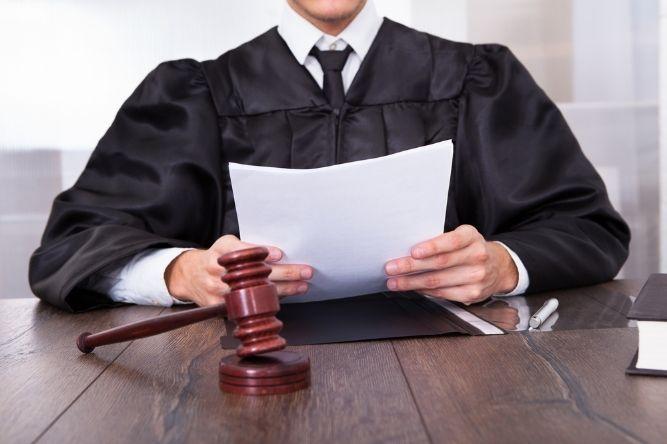
Judge Holding Documents

When you are facing charges with the Canadian court system, it helps to make sure that you have a thorough understanding of what you are being accused of. Criminal negligence is a relatively common offence, but few people know exactly what it means. You should know not only what type of crimes constitute this charge but also what the potential punishments are. 

Read this brief guide for more information about criminal negligence and the consequences:

What Constitutes Criminal Negligence?

Criminal negligence can be a serious charge in Canadian courts, but many people are still unsure exactly what constitutes this charge. While it can sometimes be difficult to define, the basic gist is that you have shown a wanton or reckless disregard for the lives of other people. There are many ways that this might take place, ranging from reckless driving to failure to provide the things that are necessary for life. 

It can also show up as a failure to do something that is your duty (as defined by the law) to perform. Even if you did not cause death by your negligence, you could still be charged if bodily harm results from your actions. 

One way to think about criminal negligence charges is to consider what you could have done to prevent a negative outcome such as injury or even death. You are likely to face these types of charges if something serious happens and you didn’t perform the required duties to keep it from happening. For example, a parent might have caused harm by not acting to protect their child, or an employer might have failed to protect their workers. 

What Are the Punishments for Criminal Negligence? 

There are two different sets of punishments spelled out in the Criminal Code for this charge. It depends on the results of your actions, whether that means death or bodily harm. As you might imagine, death carries a more serious consequence, but there are different maximum penalties for each type of outcome. 

If a firearm is involved in the offence that results in death, you may be subject to a life sentence. There is a minimum sentence of four years for this type of offence. For all other cases where a death is involved, you could be subjected to imprisonment for life. 

Cases that result only in bodily harm are still taken quite seriously by Canadian courts. This is still an indictable offence and carries with it a hefty punishment, even though it’s not as serious as cases that involve death. Instead, you’re subject to imprisonment for a maximum of ten years. 

Hire a Great Defence Lawyer

If you’re facing criminal negligence charges in Canada, you need to make sure that you have a great attorney on your side to fight on your behalf. Brodsky Amy & Gould in Winnipeg can assist you in achieving a favourable outcome for your next court case. Reach out to us today to see how we can help you fight your charges!

The post Criminal Negligence Charges appeared first on Brodsky Amy & Gould.

source https://gregbrodsky.ca/criminal-negligence-charges/?utm_source=rss&utm_medium=rss&utm_campaign=criminal-negligence-charges

Real & Demonstrative Evidence 

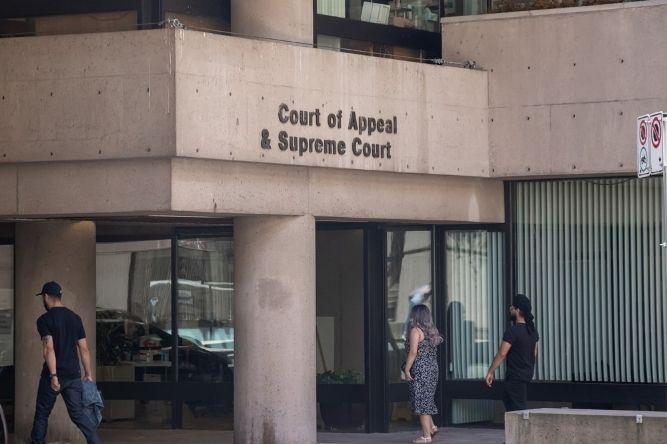
Vancouver, Canada - July 13,2020: Sign of Court of Appeal and Supreme Court in Downtown Vancouver

In courtrooms, evidence is presented to strengthen or disprove claims made by opposing parties during cases. If you’re a regular consumer of courtroom dramas or John Grisham books, you might have come across the legal terminology of “real” and “demonstrative” evidence. These types of evidence are integral in establishing facts during trials but can only be used if they’re admissible or relevant. 

So, what exactly is the difference between the two? Most evidence is broken up into different types. Real and demonstrative evidence both serve specific purposes, and to avoid any confusion, we’ll be going over what they each entail below:

Real Evidence 

Real evidence is often referred to as “physical evidence”, consisting of material items that must be relevant and authentic to the respective case. These items typically involve objects that the jury can physically hold, inspect, and visualize. In most cases, real evidence is admissible because it can be used to prove or disprove something during trials. 

Examples of Real Evidence 

The material objects involved in a case can be a variety of things. This can include forensic evidence, such as:

  • Blood
  • Fingerprints
  • DNA
  • Weapons used in the crime
  • Clothing
  • Footprints
  • Fibre samples

Photographs

In many courtroom trials, photographs can be introduced as evidence. For example, a photograph of a crime scene or damage to a vehicle may be used, but the individual that took/processed it must make a statement to prove its authenticity. There may be instances where the photographs submitted are of the material objects. 

If an individual had received injuries related to the trial, such as scratches or scars, photos of their wounds may be taken and submitted as evidence. 

Video Recordings 

While photographs can be used as evidence, video recordings made by camera or CCTV can be submitted as real evidence. For example, if video evidence of a crime is recorded, it can be seized and kept for the duration of the trial. Much like photographs, the video recordings must be authenticated, and a statement must be made explaining how the video was shot. 

Most of the real evidence presented during the case can be viewed outside of court by the judge and jury with a physical copy. The materials can be referred to while the jury decides on a verdict.

Demonstrative Evidence 

Demonstrative evidence is a persuasive tool, as it demonstrates the evidence given by a witness/evidence found at the crime scene. An attorney can use this in their presentation to support the visual evidence given. The demonstrative evidence will need to reflect the descriptions of the witness accurately.

For most legal teams, a trial with a favourable outcome will depend on showing the jury the evidence. The human brain processes visual cues better, which can help in specific trials, especially when a lot is going on. Demonstrative evidence is a vital piece of the legal strategy, as it can be paired with real evidence, as well as persuade the jury to follow your argument.

Examples of Demonstrative Evidence 

Demonstrative evidence can include the following: 

  • Photos
  • Video recordings 
  • Sound recordings
  • X-rays
  • Diagrams
  • Maps
  • Graphs
  • Forensic animation
  • Drawings
  • Models
  • Simulations

Trials can be a complex and intimidating experience. With all the legal terminology, types of evidence, and standard courtroom practices, they can be hard to follow. That’s why you need the best out of your Winnipeg Law Firms – and we can give that to you. We have a big team of experienced and reliable attorneys that are ready to take on your case. If you require legal representation or criminal defence, call us today. 

The post Real & Demonstrative Evidence  appeared first on Brodsky Amy & Gould.

source https://gregbrodsky.ca/real-amp-demonstrative-evidence/?utm_source=rss&utm_medium=rss&utm_campaign=real-amp-demonstrative-evidence

Legal Words & Definitions 

Dictionary Series - Legal

In many legal proceedings, you’ll come across words that you may not be too familiar with. You might have seen a lot of proceedings in legal dramas on TV, but sitting on a trial yourself can be an intimidating experience. The last thing you need is to be confused by the legal jargon that’s commonly used in a courtroom. 

To avoid any confusion, we’ll be going over the common legal terms you might hear and the definitions that come along with them:

Definitions 

Accused: The accused is referred to a person that is charged with a crime.

Acquittal: An acquittal is a type of verdict where the judge will find the accused not guilty. When the accused is found not guilty, they are acquitted of all the charges, as they have been dismissed. 

Adjournment: An adjournment is a postponement of a court hearing to a later date. 

Allegation: An allegation is a claim that someone has done something illegal, often made without proof of said illegal activity.

Beyond a Reasonable Doubt: In order to be guilty of a crime, the claims against the accused must be proven beyond a reasonable doubt. The proof and evidence must be clear and truthful in order to make a conviction. 

Client: A client is someone who is seeking out legal advice from a practicing lawyer about a legal issue. 

Criminal Defence Lawyer: A practicing defence lawyer who represents an individual in a criminal case.    

Cross-Examination: An opportunity in court for a lawyer to ask questions of a witness who is testifying in the trial.

Defendant: Also referred to as the accused, a defendant is an individual who is accused of a crime in a criminal proceeding. 

Evidence: Any type of proof that is presented during a trial or hearing is referred to as evidence. The evidence is often presented through testimonials from witnesses or through records and documents. Evidence may also be referred to as direct evidence or indirect evidence

Judge: An elected/appointed public official who has the authority to hear and decide cases in a court of law.

Jury: The jury is made up of 12 jurors who sit in on the court hearings and are sworn to give a verdict in a legal case based on the given evidence. 

Leading: Short for leading the witness, is a method in which a lawyer asks a question in a form that puts words in the mouth of the witness. 

Objection: An objection is a statement that opposes an aspect of the legal proceeding, such as questions.

Offence: An offence refers to the crime for which the accused is on trial. 

Paralegal: A paralegal is an individual who assists the lawyer with a case but doesn’t represent the client in a court proceeding.

Plaintiff: An individual who brings a case against another in court. 

Prosecutor: A lawyer that’s attempting to prove that the accused is guilty of the charges brought against them. 

Verdict: A conclusion made by the jury on the basis of guilty and not guilty, based on the facts presented during the trial. 

Witness: An individual that claims they have firsthand knowledge of the incriminating incident. A witness is often called to appear in court and testify.

Make sure you have the best possible Winnipeg criminal defence lawyer at your side when dealing with legal troubles. Our lawyers are experienced and well-versed in the law and will ensure that you’re properly guided through the entire process. Contact us today to schedule an appointment.  

The post Legal Words & Definitions  appeared first on Brodsky Amy & Gould.
source https://gregbrodsky.ca/legal-words-amp-definitions/?utm_source=rss&utm_medium=rss&utm_campaign=legal-words-amp-definitions

How Young Is Too Young To Be Held Liable?

Young man in handcuffs

When somebody breaks the law, they usually get legally charged, depending on the circumstances. Some of you may have had experience with this, or know someone who has. When thinking of those situations, you might picture an adult facing liability for the crime. However, what happens when the offender is under age? How young is too young to be held liable for breaking the law? We’ll be covering those questions, and explain how the Youth Criminal Justice Act works for people under the age of 18, here:

Youth Criminal Justice Act

Law

If you’re over 18, you’ll be charged and put on trial as an adult. However, there’s a special law about a specific age range of young people; those aged 12 to 17 that break the law can be held liable. The Youth Criminal Justice Act is organized differently to accommodate the ages of young offenders. The law helps by doing the following:

  • Any individual has the right to be protected from a crime committed against them by a young person.
  • When young people break the law, they are held responsible for what they did and understand how it harmed the community. 
  • Young people between 12 and 17 have the same legal rights as adults. 
  • A Youth Court is implemented for any offenders who have to appear in front of a judge.
  • When youth between 12 and 17 are charged, they receive a free legal aid lawyer. 

While there are many ways that youth can break the law. It’s between the ages of 12 and 17 that they can face serious consequences, depending on the severity of the crime. While a young person will be held accountable for the seriousness of their offence, the law also promotes the rehabilitation and reintegration of young persons who have committed said offence. 

Offences

Many offences can be committed by a youth. Some examples of those are as follows:

Drug & Alcohol Possession 

If police suspect a youth has possession of drugs or alcohol, they are legally allowed to search them upon arrest. If caught with drugs or alcohol, the youth can be convicted of possession. 

Firearm Possession 

An unlicenced illegal possession or use of a firearm can constitute being charged under the Criminal Code. 

Assault

In the event of an assault, a young person may be charged and have to appear in Youth Court. Any physical assault can warrant serious consequences for the offender.

As mentioned, many crimes can be committed by a youth. Offences such as impaired driving, theft, vandalism, sexual assault, harassment, etc. Having a criminal record at a young age can prevent you from such things as landing a job or attempting to travel to other countries. 

Laws can be tricky to navigate on your own. If you’re in need of legal advice, you can rest easy knowing that there is help available. Contact a youth offence lawyer in Winnipeg. They are highly trained to provide legal advice and will equip you with anything you need to know to move forward. 

The post How Young Is Too Young To Be Held Liable? appeared first on Brodsky Amy & Gould.

source https://gregbrodsky.ca/how-young-is-too-young-to-be-held-liable-2/?utm_source=rss&utm_medium=rss&utm_campaign=how-young-is-too-young-to-be-held-liable-2

What Is Expungement? 

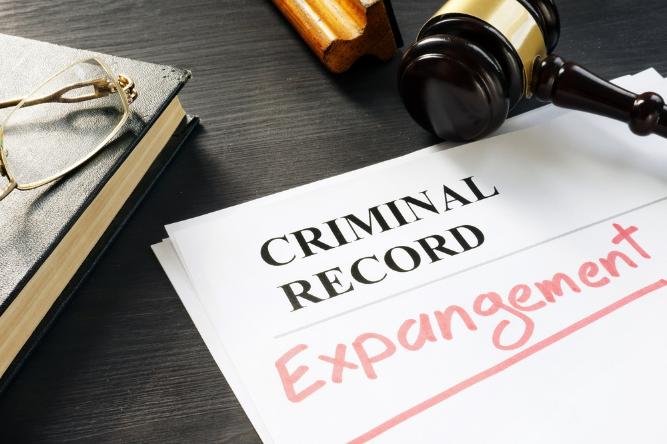
Expunge of criminal record. Expungement written on a document

A criminal record can create a lot of difficulties for you down the road. Whether it was being arrested or convicted, your record can prevent employers from hiring you or landlords from renting out to you. However, there is a way in which you can potentially expunge an arrest or conviction from your record. You may be wondering what an expungement is and what it entails. We will break down and explain the basics of getting an offence expunged: 

Expungement 

What Does It Mean? 

To expunge something off of your record means to destroy or remove it. This process can be done due to the Expungement of Historically Unjust Convictions Act. This legislation can allow for the permanent removal or destruction of unjust convictions from federal databases. The Parole Board of Canada is the factor in ordering or refusing to order the expungement.

Eligibility 

There are certain convictions under the Criminal Code and the National Defence Act that can be considered eligible for expungement. First, you will have to ensure you are convicted of an offence in the schedule to the Expungement Act

Convictions that are eligible for expungement: 

  • Gross indecency or an attempt to commit gross indecency 
  • Buggery or attempt to commit buggery 
  • Any offence that is under the National Defence Act or a previous version of that act or omission that constitutes an offence listed in the Expungement Act
  • Expungement of historically unjust convictions, such as offences involving consensual sexual activity with a same-sex partner, is now in place today 

Make sure to brush up on information related to expungements, as there may be some cases in which only certain factors are allowed. For example, expungement may only be possible for arrests and misdemeanors or may only be available to those who have already served their sentences. 

Applying for Expungement 

There is no processing fee required to apply for an expungement order. If you fit the criteria for expungement, keep in mind that costs may be incurred with acquiring documentation. Court or police documents, as well as sworn statements or declarations, may be subject to fees. Applicants may have to provide evidence that their conviction follows the required criteria.

The Three Criteria  

  • The activity that the person was convicted of was between persons of the same-sex.
  • The person (not the convicted) had given their consent before the activity began.
  • The person (not the convicted) who was participating had to be 16 years of age or older during the time of the activity. 

Posthumous Expungement 

Most convictions that are eligible for an expungement order can be decades old. Many of these individuals may be deceased and unable to apply for expungement. A representative may apply for expungement on behalf of the deceased, as it is now recognized that the eligible conviction may be unjust under the Canadian Charter of Rights and Freedoms.

For any assistance and representation in any offences, contact Winnipeg Defence lawyers Brodsky Amy & Gould. Any of your needs will be met professionally, as well as respectfully. Do not go at this alone. Let these knowledgeable lawyers take it from here. 

The post What Is Expungement?  appeared first on Brodsky Amy & Gould.

source https://gregbrodsky.ca/what-is-expungement/?utm_source=rss&utm_medium=rss&utm_campaign=what-is-expungement

Review Of A Case: David Milgaard

Concepts of law, Lawyer give legal advice to businessman about case in office.

Can you imagine spending over 20 years behind bars, serving time for a crime you didn’t commit? The mere thought of it is gut-wrenching. But unfortunately, wrongful convictions do occur. 

That’s exactly what happened to David Milgaard, who was only 17 when he was convicted. He was sentenced to life in prison without parole for 10 years. In total, Milgaard was wrongfully imprisoned for 23 years. And the man who actually committed the crime wasn’t caught for nearly two decades.

Each year, thousands of cases are taken to court in Canada. Most cases heard in court are resolved at a provincial level. But others have wide-reaching effects, going on to reach the Supreme Court. These cases have long-lasting impacts on the Canadian System of Justice, and our society as a whole. 

Some cases are so captivating, so controversial, that they capture nationwide attention. Today, we’re going to cover one that led to lasting changes in the Canadian Criminal Justice System: the wrongful conviction of David Milgaard.

The Events

20-year-old Gail Miller was murdered on January 31 in 1969. Police interrogated a list of over 100 suspects but were unable to find any legitimate leads on who the culprit might be.

At the time, David Milgaard (who was born in Winnipeg, Manitoba) was on a road trip with two friends. They stopped in Saskatoon on the same night that Miller was murdered. 

Milgaard became a suspect when his two friends were coerced into false confessions. The young teenagers were anxious to leave police custody and fabricated a series of events so that police would let them go. 

Another friend of Milgaard’s (Albert Cadrain) confessed to the police that he had seen blood on Milgaard’s clothing. But this, too, was fabricated; it was motivated because Cadrain was paid a $2,000 reward for “finding evidence”.

With these pieces of evidence and no other suspects, the court determined that Milgaard was responsible for the murder. 

The police ignored a tip from the culprit’s ex-wife; it was dismissed on the grounds that it came in at 4 AM, and the woman had been drinking. But years later, police would discover that she had been correct. 

Finally, a piece of DNA evidence confirmed that Milgaard was not involved in the crime. In 1997, the Saskatchewan government recognized that the conviction was wrongful. Larry Fisher, was convicted of murder in 1999, 30 years after the initial crime took place.

Milgaard’s Release from Prison

Milgaard was officially released in 1992, 23 years after his initial conviction. Eventually, Milgaard was given $10 million in compensation for his wrongful conviction, legal fees, and lost wages. But can you put a price on 23 years of your life?

Stories like these go to show how important it is to have an experienced criminal lawyer in court. One of the roles of a criminal lawyer is to prevent wrongful convictions. Interested in learning more about how a criminal lawyer can help? You can find more info here.

The post Review Of A Case: David Milgaard appeared first on Brodsky Amy & Gould.

source https://gregbrodsky.ca/review-of-a-case-david-milgaard/?utm_source=rss&utm_medium=rss&utm_campaign=review-of-a-case-david-milgaard

Defining Legal Terminology

Statue of lady justice

If you aren’t familiar with legal terminology, it can be tough to understand. Most of the language is highly specialized. You might know some of the more common terms, like “innocent until proven guilty” or “jail sentence”. But other, less-commonly used words and phrases have precise and technical meanings. 

Attending a trial can be bewildering enough as it is; the last thing you want is for technical legal terminology to make things more confusing. We’ve assembled a glossary of common legal terms that you may come across in court: 

Definitions of Legal Terminology

Plaintiff: An individual who brings charges against the defendant.

Defendant: An individual or enterprise that is accused of committing a crime. Defendants are sometimes referred to as the accused. 

Client: This term refers to someone who seeks legal advice or representation from a lawyer regarding a criminal case. 

Evidence: A piece of information (such as a document, DNA sample, video footage, or photograph) that is used to prove facts and claims at a trial. 

Verdict: When a trial concludes, the judge or jury will arrive at a verdict; it’s a final decision that determines whether or not the accused is guilty of a crime.

Acquittal: This is a type of verdict that means the judge finds the accused/defendant not guilty. When someone is “acquitted” of all charges, it means the charges have been dismissed and dropped. 

Damages: Finances paid to the plaintiff when the judge finds the defendant guilty. Some damages are intended to compensate for harm or property damage, while others are meant to punish the defendant and deter them from repeating the behaviour. 

Beyond a reasonable doubt: To convict someone of a crime, the prosecutor must prove that all claims are true beyond a reasonable doubt. They must provide proof and evidence of their arguments. It’s as close to the absolute certainty of the truth as the court can get.

Witness: Someone who claims to have firsthand knowledge about the incident that occurred. They are often called to appear in court and testify their account.

Victim: An individual that was affected by the events of the trial.

Paralegal: Someone who assists a lawyer with a case, but does not represent their client in court. 

Judge: An appointed official who uses all facts of the trial to determine whether a defendant is guilty or not guilty. They also determine the sentence for the defendant if found guilty. 

Jury: A group of citizens (up to 12) who are called in to hear the evidence of a case, and vote whether they find the defendant guilty or not guilty. 

Just cause: This refers to having a reasonable basis for making a decision. If an employee is fired, their employer must have just cause for terminating their position.

Prosecutor: A lawyer who aims to prove that the defendant is guilty of the charges brought against them.

Criminal lawyer/Defence lawyer: A lawyer who represents the defendant in a criminal case. A defence lawyer uses their experience and training in criminal law to defend those who are accused of crimes. 

At Brodsky Amy & Gould, our criminal lawyers can help you understand the facts of your case. With our experienced legal representation, we will guide you through the court process, and ensure that your rights are protected. To schedule an appointment, contact us today. 

The post Defining Legal Terminology appeared first on Brodsky Amy & Gould.

source https://gregbrodsky.ca/defining-legal-terminology/?utm_source=rss&utm_medium=rss&utm_campaign=defining-legal-terminology

Design a site like this with WordPress.com
Get started